

The relationship between Bolshevism and Fascism is marked by significant ideological and methodological parallels, despite their opposing political ends. Both movements emerged from the upheaval of World War I and shared revolutionary ambitions, with initial ties to Marxist thought. Benito Mussolini, before founding Fascism, was a committed Marxist and editor of the socialist newspaper Avanti!, advocating for revolutionary action and intervention in the war, which led to his expulsion from the Italian Socialist Party.
Similarly, Vladimir Lenin was a learned Marxist whose opposition to Russia's involvement in the war contrasted with Mussolini's support for intervention.
The Bolshevik Revolution's success and its perceived threat of spreading revolution to Italy are cited as key catalysts for the rise of Fascism, as Mussolini mobilized opposition to Bolshevism, which helped Fascism achieve exponential growth.
Methodologically, the regimes of Nazi Germany, Fascist Italy, and the Soviet Union exhibited striking similarities. All three movements displayed intense idealism combined with fanaticism, a closed-mindedness to dissent, and the transformation of politics into a quasi-religious devotion to the leader.
They established one-party dictatorships, centralized control over state institutions, and used secret police forces to suppress opposition, with methods including surveillance, house searches, and political trials.
The arts, media, and education were all subordinated to state propaganda, with literature, film, and theater serving as tools for ideological indoctrination.
The use of mass rallies, loudspeaker systems, and the cult of the leader—such as Hitler, Mussolini, and Lenin—further underscored these parallels.
Some scholars argue that the core characteristics of fascism—nationalism, authoritarianism, centralism, and terror—were already present in Bolshevism, leading to the assertion that fascism was essentially a copy of Bolshevism.
This view is supported by historical instances of cooperation, such as the Soviet Union's provision of oil and war materials to Fascist Italy during its invasion of Ethiopia, despite formal condemnation of Fascism.
Even the Russian Fascist Party in Harbin, China, acknowledged Stalinism as a purified form of Russian Fascism.
These connections highlight that while Bolshevism and Fascism differed in their ultimate goals—international revolution versus national supremacy—they shared a revolutionary, totalitarian, and anti-liberal foundation, making their historical relationship complex and deeply intertwined.
BREAKING: Iran released the military to attack the USA…
The Pentagon just added overtime hours. https://truthsocial.com/@Qanon76/116194789510611466

Based Christoph Waltz destroyed lefty argument 🔥 https://truthsocial.com/@Qanon76/116192277635300799
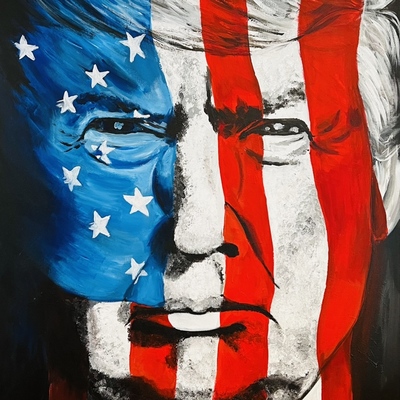
Worst of the worst for Oregon
These are who Oregon's sanctuary policies are protecting
Here's the link for the Oregon search and below the main worst of the worst.
https://www.dhs.gov/wow?combine=&field_country_of_origin_target_id=All&field_state_value=Oregon&page=0
https://www.dhs.gov/wow

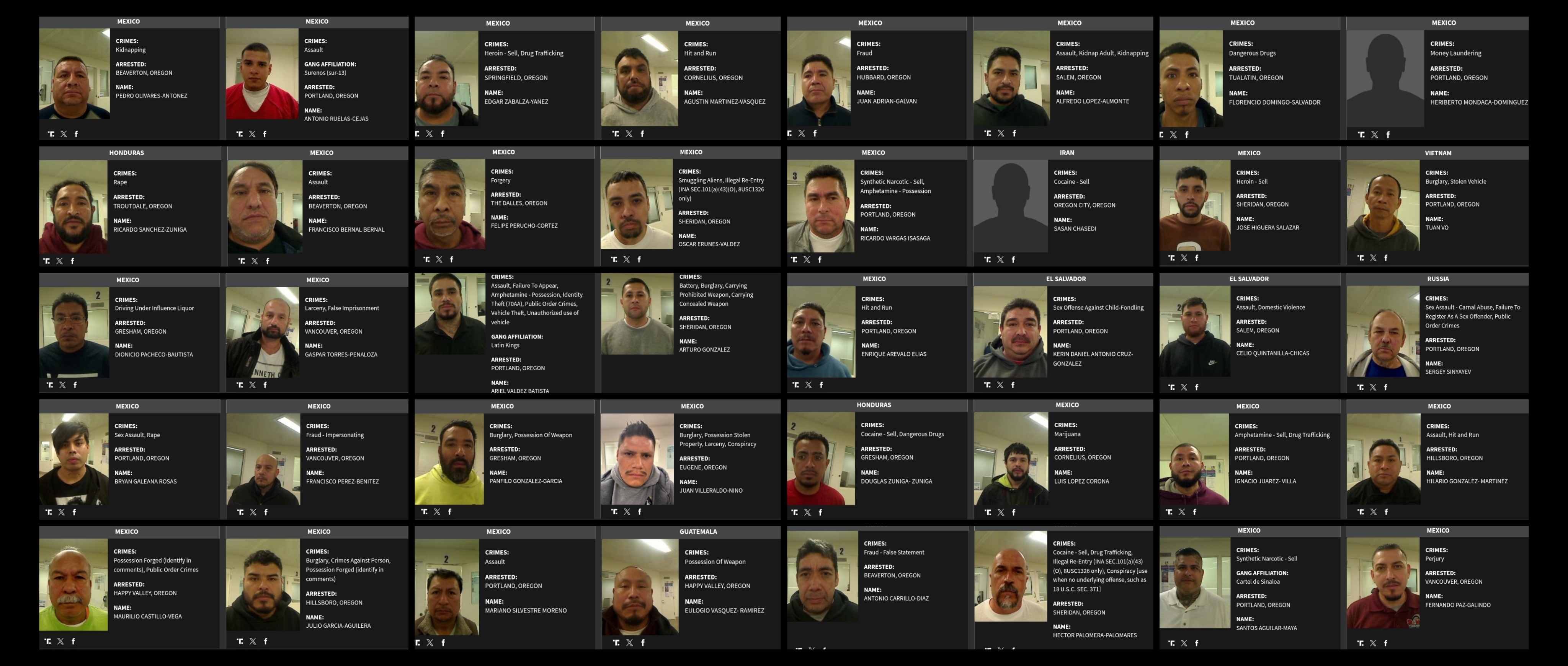
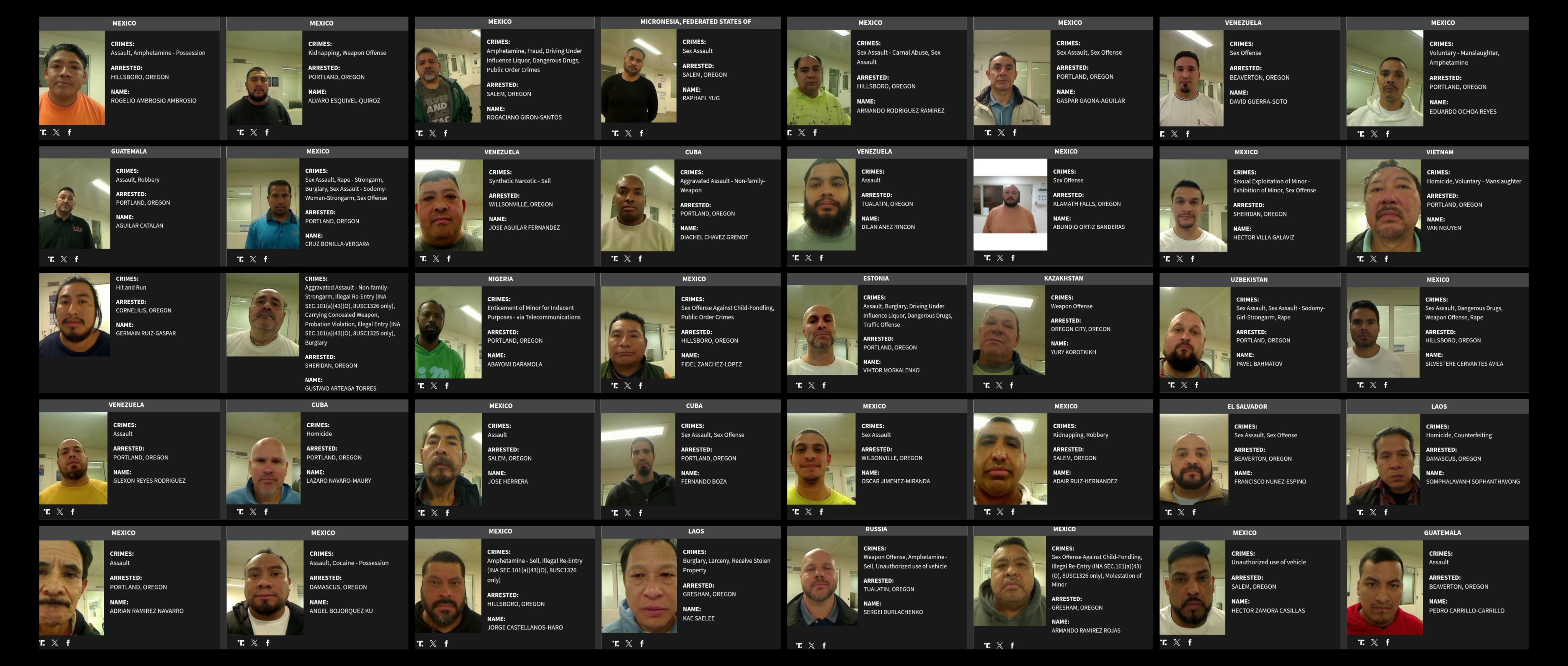


⤵👍🏻👍🏻A Must Read
(Very Short)
From Andy Ngo
#CitizenJournalist
Who broke Portland Antifa story.
#CitizenJournalist
#SpotOn https://truthsocial.com/@JimTLapper/116036585165538825
@JimTLapper https://truthsocial.com/group/american-patriot/statuses/116036613208327313
https://makeoregongreatagain.locals.com/upost/7278400/co-conspirators-are-not-being-ruled-out-there-have-also-been-rumors-of-future-terror-operations-pla